


It’s time to announce our next Read With Us selection, and I’m particularly excited about…
Read With Us: It’s Good People Discussion Day

The day has come to discuss the book Good People by Patmeena Sabit. I read it ages ago but I’ve refreshed my memory of it for the purposes of our Zoom and this is my question(s) to you all:
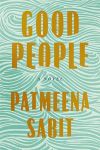
The title Good People raises an interesting question: what does it actually mean to be a “good person”?
Throughout the novel, many of the characters are concerned with how they are seen by others and with maintaining their reputation within the community. How do the characters try to shape the way they are perceived? Do you think they are motivated more by genuine goodness, by social expectations, or by a desire to belong and be accepted?
By the end of the novel, who did you consider to be truly “good people”—and did your opinion of any characters change along the way?
Be sure and check out Bonny’s and Kym’s blogs today to see what they are asking, too.
I’m looking forward to seeing your faces tonight on my computer screen!
Related Posts


Comments (7)
Comments are closed.
That is a tough question as we often define a good person by their outward behavior and whether they fit in with community expectations. According to some friends, some times, the Sharaf family was composed of mainly good people, but I found my own opinion changing each time a new character expressed an opinion. By the end of the book I think Maryam Sharaf was one of the few “good people” in the book. I thought she was a devoted mother who was navigating raising her children, balancing Afghan expectations with the realities of American life. I’m looking forward to our discussion tonight to hear what others think!
I agree with Bonny — this is a tough one! I think there’s often a difference between being a “good” person and being perceived by others as good, and so much of the latter is dependent upon what someone else’s values are. There have been plenty of people in history who have believed they were doing something good but whose actions have caused others to suffer.
I think the author titled this novel brilliantly… truly brilliantly! Because my thoughts on “good people” went for a bit of a roller coaster ride during the course of this novel. By the end of the novel I believe that she titled the book “Good People” sarcastically… because true that!
I was fascinated by how many times and in how many ways the phrase “good people” came up in the book. In fact, I had planned to count how many times the author used the phrase when I re-read the book before our discussion . . . but in the end, I didn’t re-read it, so I didn’t get a chance to do that. Anyway. . . this is going to be a good discussion! 😉
What a great question! How often are people considered good only by those who share the same values? Is anyone truly a good person?
Great question! So many people had opinions (and do in real life as well). Is a good person, especially someone who is a refugee, someone who assimilates into American culture? Is it someone who is self-sufficient and economically successful? Muslim culture has standards of goodness, but what that means varies in the cultures within it. In my observation, Somali girls cover their heads when they are just tiny, as do conservative Afghans. Some people from Iraq don’t encourage their girls to wear a headscarf till puberty. Or declare that their daughters are American now and can do as they like. Plus there is fasting, relationships between the sexes (as in this book) and many other things. Is a good person someone whose children “tow the line” to community standards? Or someone who loves and nurtures (and accepts) their children?
Some people are judgemental about goodness, others are charitable.
And in this book, we saw all kinds of assessments, and then, of course, were VERY tempted to make our own, because that’s what the book was all about.
I had hoped to join you all tonight, but won’t be able to — I was REALLY looking forward to talking about this.
One thing I will say, having worked cross culturally for a while. It’s important to learn and try to understand another culture. But even if you do your best, you will OFTEN get something wrong – either misunderstand, or misstep. It’s very humbling. I believe it also happens to my refugee friends who are trying to fit in or/and stay a good person in their own culture, as well.
Interesting. Everyone’s opinion of who are good people is their opinion and open to change at any time. Reading the book I tended to flip back and forth as it went on.